The shortlist

Ten connections may be enough for you; a busy household should count its devices first.
Read the review
Unlimited connections describe the account allowance, not unlimited speed or permission to resell access.
Read the review
The free plan is not the full paid service: server selection, streaming support, and other features differ.
Read the reviewPick for your apps, rather than the Android label
Start with NordVPN for a mix of devices, Surfshark for a large personal household, or Proton VPN Free for basic browsing without a subscription. That shortlist reflects documented app features and account limits. We have not run original Android speed, battery, streaming, or leak tests.
Check your phone’s Android version and the provider’s current download page first. A phone, tablet, and Android TV can have different interfaces and controls. A feature advertised for Windows does not establish Android support, and a phone APK does not establish TV support.
The useful differences at a glance
Scroll the table to see every column.
| Choice | Account allowance | Android routing feature | Main buying question |
|---|---|---|---|
| NordVPN | 10 simultaneous connections | App exclusions through split tunneling | Do ten active devices cover your setup? |
| Surfshark | Unlimited simultaneous connections | Bypasser on supported apps | Do you need many devices, or just one phone? |
| Proton VPN Free | 1 active connection, unlimited data | Paid split tunneling is not included | Is basic browsing enough without paid server selection or streaming support? |
| Proton VPN paid | Up to 10 connections | Split tunneling on supported Android app | Do the paid features justify the subscription for your use? |
Always-on and blocking behavior also depend on Android and the app configuration. They are not a reason to assume every app has identical protection.
NordVPN: a general starting point
NordVPN’s ten-connection limit is a concrete fit for many individuals and smaller households. Count devices that will connect at the same time, rather than every device that has the app installed. Read the NordVPN review before choosing a subscription tier with extra tools.
Its Android split-tunneling instructions describe excluding selected apps from the VPN. That can be useful for an app that requires your normal connection, but it also sends that app’s traffic outside the tunnel. Review the exclusion list after setup.
NordVPN documents Android TV separately in the same support guide. Check the TV interface itself if remote control, Kodi, or casting is the reason for your purchase.
Surfshark: a many-device option
Surfshark’s unlimited simultaneous connections can suit a personal household with phones, laptops, and TVs. The allowance alone has little benefit if you only intend to protect one phone. Compare the prepaid total and renewal in our cheap VPN guide before committing.
Bypasser is its name for split tunneling. Check the current platform support and instructions, including whether your rule bypasses selected apps or routes only selected apps through the VPN. Those rules produce different coverage. A bypass is a deliberate privacy tradeoff, rather than a free compatibility fix.
Our Surfshark review covers the account and plan questions. App availability and feature parity still need a device-specific check.
Proton VPN: separate the free and paid plans
Proton’s current Android guide requires Android 8.0 or later. The free plan’s unlimited data is useful for basic browsing, but it supports one active connection. Paid split tunneling, supported streaming, and other paid features need a separate subscription decision.
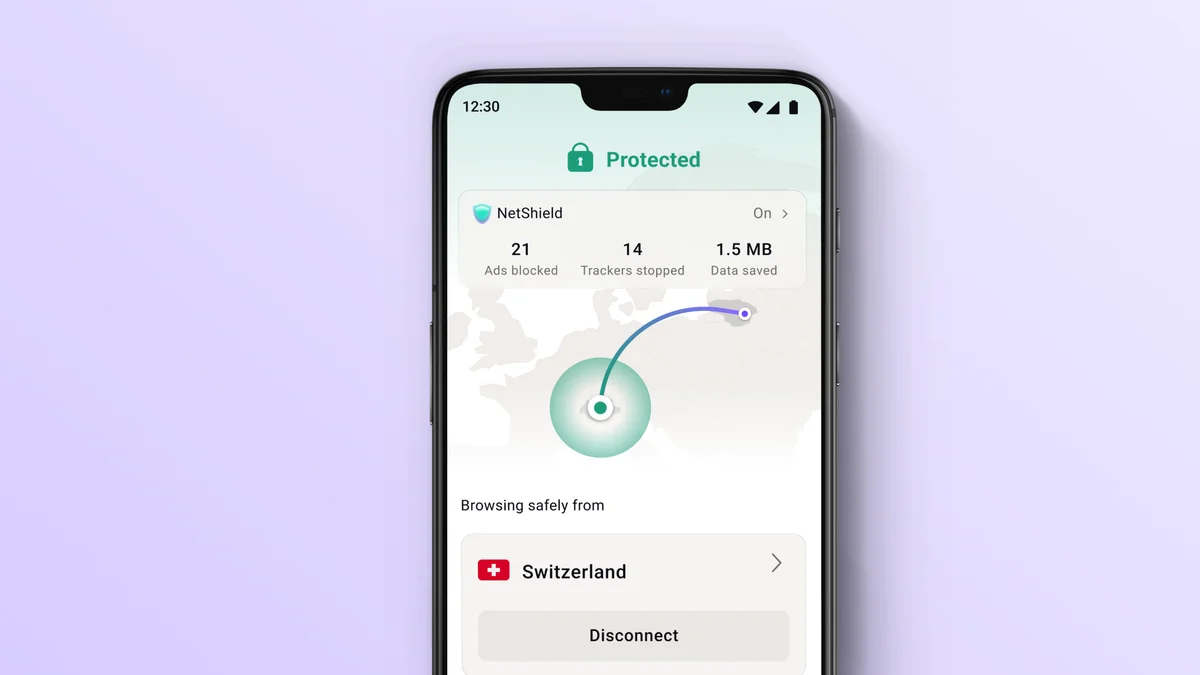
The Android installation guide provides the current official app route. For the permanent free option, use Proton’s free-plan page. For paid-plan details, read our Proton VPN review.
Configure connection protection carefully
Android has system settings for always-on VPN and blocking connections outside the VPN. Search your device settings for “VPN,” select the installed app’s options, and follow that provider’s instructions. Names and availability can differ by phone manufacturer and app.
Always-on attempts to keep the VPN service running. Blocking non-VPN traffic can stop internet access until the tunnel connects. If an app is excluded through split tunneling, a blocking rule may prevent it from connecting rather than let it use the ordinary network. Android’s VPN documentation explains that interaction.
Change one setting at a time. Test the apps you need after enabling a rule, including on a network that requires a sign-in page. Keep a way to find the settings again if internet access stops.
Check for another app using the VPN service
Android allows one active VPN service per user or profile. Starting another can stop the existing service. Some local firewalls and ad blockers use the same facility even when they do not send traffic to a commercial VPN server.
If the VPN repeatedly disconnects when another security app opens, inspect Android’s active VPN entry before changing providers. Also follow the VPN provider’s battery-management guidance for your phone. A background policy that stops the app is a different problem from a wrong server choice.
Use a repeatable phone check
- At home: connect and check messaging, browsing, a video call, and any app you rely on.
- After screen lock: reopen the phone and check the connection status, rather than assuming it survived sleep.
- On mobile data: move away from Wi-Fi and repeat the check. Record a failure and the app version.
- With local devices: try casting or a printer if these are part of your routine. Inspect local-network settings before making exclusions.
- After a restart: confirm the chosen always-on or auto-connect behavior actually resumes.
These are checks for your own setup, not results we have measured. A VPN usually changes your public IP; it does not generally replace GPS location or remove information an app already has from your account and permissions.
Treat Android TV as a separate purchase check
Proton has a dedicated Android TV app, and its paid streaming support is distinct from the free plan. Other providers also document their TV interfaces separately. Verify installation, remote-friendly controls, server selection, and the features available on the exact box.
For Kodi, use our device-first setup guide. For Fire TV, check the model and operating system rather than assuming it is interchangeable with Android TV.
Download from a source you can verify
Use the provider’s official download page to reach the correct store listing or supported APK. Check the developer identity and update path. Avoid modified paid apps and unsolicited APK links.
Android’s connection request is normal for a VPN app, but it is not a reason to grant unrelated access without understanding it. If you are only trying the free plan, make sure you are choosing the permanent free tier rather than a paid trial or subscription offer.
Common questions
What is the best free VPN for Android?
Proton VPN Free is our starting option for basic browsing because it has unlimited data. It allows one active connection, and paid streaming support and split tunneling are not included. Check the current Android requirement before installing.
Can an Android VPN change my GPS location?
A VPN changes the network route and usually the public IP address seen by websites. It does not generally replace GPS location, account country, or permissions already granted to apps.
Why does another VPN disconnect when I turn one on?
Android allows one active VPN service per user or profile. A local firewall, ad blocker, or another VPN app using that service can conflict. Check which app is active in Android’s VPN settings.
Sources you can check
- Android: VPN service, always-on and blocking rules
- NordVPN: split tunneling on Android and Android TV
- NordVPN: device connection limit
- Surfshark: Bypasser and supported platforms
- Proton VPN: Android requirements and installation
- Proton VPN: paid split-tunneling feature
- Proton VPN: Android TV app and plan differences
- Proton: official media kit and product imagery
Sources reviewed for this page on . A provider’s documentation describes its published offering; it is not our original performance test.